


September 12, 2025
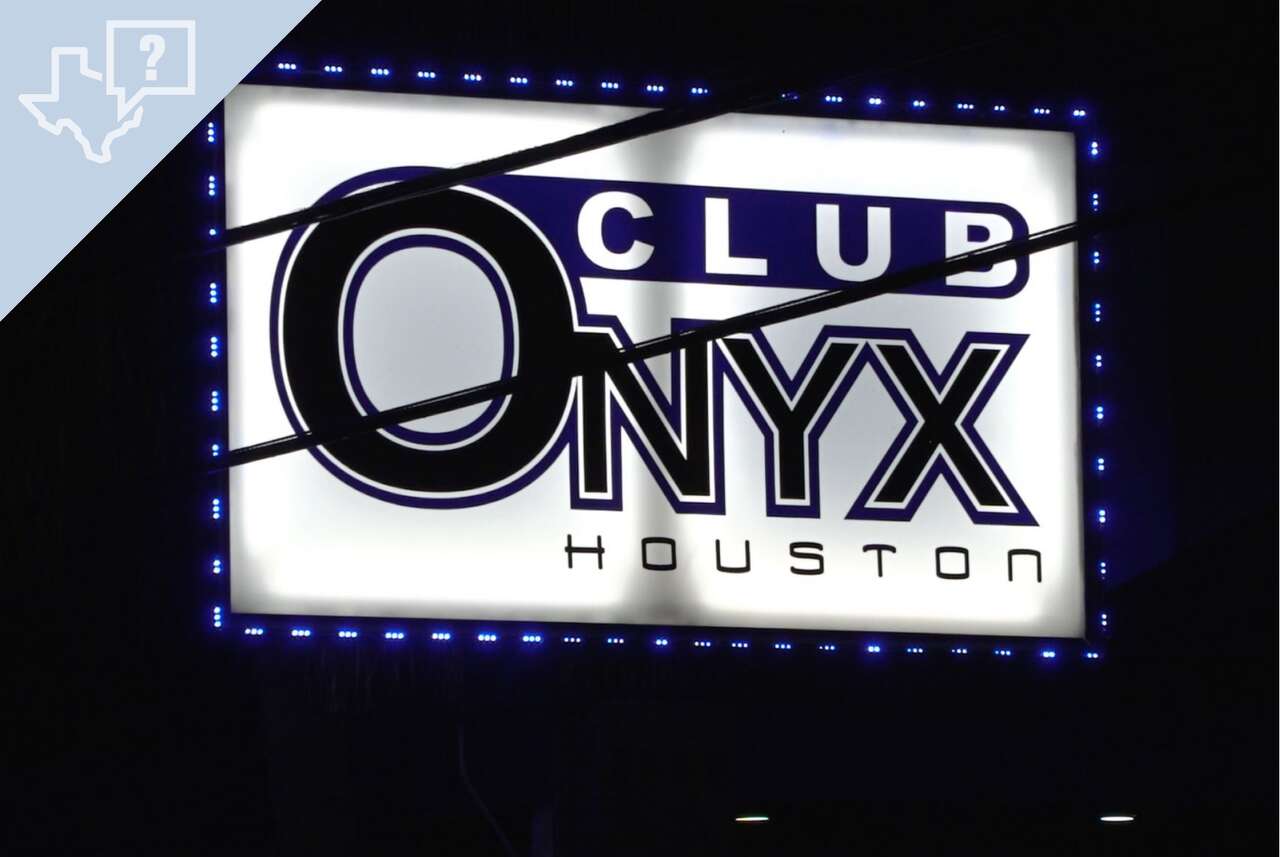
Houston's long history with vice, from Vinegar Hill to Drake's strip club shoutouts
Houston has never been shy about having good times — or about cracking down on them.
Long before Canadian-rapper-turned-honorary-Houstonian Drake was name-dropping Houston strip clubs and asking its dancers for hugs in his songs, before local rappers from the city's early hip-hop scene were testing tracks under the neon glow of adult entertainment venues, the Bayou City was already carving out a reputation as one of America's great capitals of vice.
In the late 1800s, red-light districts flourished in the heart of downtown Houston, and by the mid-20th century, Houstonians were instead flocking to adult theaters and burlesque shows on Washington Avenue. And with the oil booms came a lot of wealthy men looking to make it rain at early strip clubs across the city.
Then came the moments that cemented Houston's reputation as one of the country's strip-club capitals: the late Anna Nicole Smith stepping off a local stage into stardom, early Houston rappers testing music in hazy clubs and, eventually, artists like Drake and Lil Wayne putting Houston's nightlife on the international stage.
The powers that be — City Hall, the cops, prosecutors, etc. — have tried to tame the scene with raids, ordinances and lawsuits over the years, but vice here has not vanished. In other words, Houston's sex and nightlife economies have long been baked into the city's DNA, and whether you like it or not, vice has shaped the city's identity and fame.
The early days
Let's take a quick look at the stories of Vinegar Hill and Happy Hollow.
By the late 1860s, Vinegar Hill — a wedge of downtown near Buffalo Bayou where Washington Avenue and Preston Street break off — was established as the city's original red-light district. Its rickety shacks and saloons were clustered around "Tin Can Alley," where gamblers, drug dealers and working women ran the night. Caroline Riley, the so-called "Queen of Vinegar Hill," ruled the neighborhood like a bawdy mayor, doling out booze and companionship to railroad men and dockworkers fresh off the bayou.
Firefighters tried to burn it down building by building, and much of it was cleared by the turn of the century to expand the railroads near downtown.
What is now the city's theater district was once known as Happy Hollow, another red-light district of those times. The "hollow" was literally a low gully packed with "female boarding houses," polite code for brothels, and late-night saloons. Police raids and the city's refusal to renew licenses hollowed out the district by the 1910s, and the businesses moved to other parts of the city away from the business district.
Houston had learned something important: vice might change neighborhoods, but it never leaves town.
New tastes
As Houston moved through the World Wars and the oil booms, its vice scene got slicker. No more brothels disguised as boarding houses, but theaters and social clubs.
From the 1920s to the '40s, advertisements for "burlesque revues," "strictly ADULT entertainment" and "stage shows" began popping up in the pages of the Houston Chronicle, at venues like the historic City Auditorium and the Ritz Theatre (later known as the Majestic Metro) downtown.
Clubs were also gaining steam. An advertisement in the Oct. 4, 1940, edition of the Chronicle was promoting the "girl-esk" show of one Mona Leslie at the Cotton Club near Washington Avenue and Harvard Street. (No one tell the mayor about these barely clad young ladies on Washington!)
It only got raunchier from there.
The Heights Theatre — yes, the one that's now the backdrop of everyone's White Linen Night social media posts — notoriously began showing adult films in July 1966 as the "Height Art Adult Cinema." By the 1970s, dozens of Houston screens catered to an adult crowd, like the French Quarter Theater at the corner of Louisiana and Elgin.
Houston strip clubs get loud
By the late 1970s and into the '80s, Houston's adult entertainment scene had moved beyond smoky theaters and into glittering topless palaces. At the forefront were establishments like Caligula XXI (an opulent strip club off Winrock and Westheimer), Snooty Fox Club in northwest Houston and Boobie Rock in Montrose.
Houston striptease joints then became unexpected laboratories for music.
Local DJs and rappers tested early Houston hip-hop tracks in strip clubs to gauge crowd response. In "Houston Rap Tapes: An Oral History of Bayou City Hip-Hop," author Lance Scott Walker discusses the importance of strip clubs as musical testing grounds with multiple Houston rappers.
"It's a serious connection because when you play that, and you instantly get a response, then you know that's something you can work with. You can keep on pushing it," said Screwed Up Click member DJ Gold in the book. "But you have to try it in the strip clubs first because the girls are always—that's one thing—the girls are always gonna promote good music."
And then came the saga of Anna Nicole Smith.
In the early 1990s, a young Vickie Lynn Hogan took to the stage at Gigi's Cabaret. There, she caught the eye of 89-year-old oil tycoon J. Howard Marshall II. Their (brief) relationship catapulted her from Houston's topless bars to Playboy stardom.
Houston's club scene was cemented as a launchpad not just for music, but for celebrity itself.
The crackdown
In 1997, Houston drew a line in the sand with its first "Sexually Oriented Business Ordinance." Among the rules: no more topless dancers and the infamous "three-foot rule" banned close-contact lap dances.
The state upped the pressure in 2007 with the so-called "pole tax," a $5 surcharge on every customer, billed as a way to fund programs for sexual assault victims. Clubs challenged it, but in 2011, the Texas Supreme Court upheld the fee.
After years of lawsuits and half-enforced rules, City Hall finally struck a deal in 2013.
Known as the "Sweet 16 agreement," it allowed 16 of Houston's largest clubs to relax certain restrictions in exchange for paying roughly $1 million a year into a city anti-trafficking fund. Critics called it a sweetheart deal; supporters called it overdue closure.
But even as corporate and municipal lawyers sparred in the courtroom, on the pop culture side of things, rappers were busy immortalizing Houston's strip clubs in their lyrics.
International fame
Houston's strip clubs are global landmarks today because rap turned them into cultural shorthand for the city itself.
In 2016, Drake filmed part of his "Child's Play" video at V Live, cementing the club's neon stage as part of his Houston mythos. Earlier, he even name-checked Treasures in his 2013 album "Nothing Was the Same," with lyrics alluding to Treasures on Westheimer.
Beyoncé did the same in her 2013 "No Angel" music video, which features cameos from Houston rap icons and includes scenes with dancers inside V Live.
Add in references from artists like Lil Wayne, Travis Scott and Bun B, and you've got a city with one of the top adult entertainment reputations in the country.
 | Jhair Romero, Houston Explained Host |
Ask Us Anything
What stumps you about Houston? Reply directly to this email with your questions.


Unsubscribe | Manage Preferences

Houston Chronicle
4747 Southwest Freeway, Houston, TX 77027
© 2025 Hearst Newspapers, LLC


No comments:
Post a Comment