Officials in Westminster have threatened to veto a new Scottish law allowing trans people to self-declare their gender without a medical diagnosis. The Scottish Parliament has also voted to lower the age when people can legally change their gender to 16, which UK ministers say could threaten the safety of children. Thousands of flights have been cancelled in the US as a "bomb cyclone" brings the coldest Christmas in decades, says the BBC. The "once-in-a-generation" storm will see temperatures drop as low as -55C, chilly enough to cause frostbite on bare skin in five minutes. Nigella Lawson has warned against "obscene over-indulgence" this festive season. It's "madness" to serve starters before Christmas lunch, the celebrity chef told The News Agents podcast, because it leaves you feeling like "a bloated wreck". Bah, humbug! |
The Taliban are losing their grip |
The Taliban are "losing their grip on Afghanistan", says Lynne O'Donnell in Foreign Policy. Relations with long-time partner Pakistan have almost completely broken down: Islamabad has effectively withdrawn its ambassador after he was attacked at the Pakistani embassy. Clashes have erupted on the border with Iran. Most damaging of all was a recent siege by gunmen on a Kabul hotel used by Chinese businessmen. The assault, which left five Chinese injured, prompted Beijing to order all its nationals to leave the country – a devastating blow to Afghanistan's push for economic development. In a further sign of diminishing confidence, the UN is "consolidating its presence" in Kabul, scaling down multiple locations to one fortified compound. |
The attacks are mostly the work of Islamic State-Khorasan, a breakaway group of disaffected Taliban fighters. Targeting the Chinese helps "boost recruitment" to their cause, because many Afghan Muslims are upset about Beijing's mistreatment of Uighur Muslims – to which the Taliban turns a blind eye in order to secure trade deals. But the Taliban hasn't helped itself. It has invited into the country "dozens of terrorist and jihadi groups" which are now causing mischief with Pakistan. And it has attracted further international condemnation for banning women from universities and secondary education, despite pledging not to. The main victims, of course, will be ordinary Afghans, two-thirds of whom already can't afford enough to eat. The tragedy of this "war-ravaged" country goes on.
|
|
|
Is your name more common among humans, or among dogs? To find out, The Washington Post has crunched through American baby-naming records and a pet adoption database to assess the doggyness and humanness of each name. Maddy, for example, is much more common as a dog name; Michele is more popular with humans; Flora is in between. Look up your own name – or your dog's – here. |
|
|
The government is in an "unwinnable pay battle" with nurses, says Fraser Nelson in The Daily Telegraph. So why doesn't Rishi Sunak try being candid? Such leadership as there is on this issue is coming from Labour's Mark Drakeford, the First Minister of Wales. Giving nurses more pay, he says, means "fewer treatments, fewer nurses, less money for the health service". Every 1% pay rise for the NHS workforce is the equivalent to hiring 16,000 extra nurses or 500,000 operations. Our nurses deserve more, but, Sunak could say, they are "reasonably looked after": their average pay package is actually a healthy £50k. The problem is that a third of it is in pension and a good chunk in other benefits. Given the choice, nurses might take a different mix: more salary, less pension. Why not give them that choice? |
|
|
Share The Knowledge with friends and family before the end of the year for a chance to win a £500 John Lewis voucher. |
Each successful referral counts as one entry, so the more you make, the better your chances. Simply share via WhatsApp or email below, or click here to copy and paste your unique referral link. |
|
|
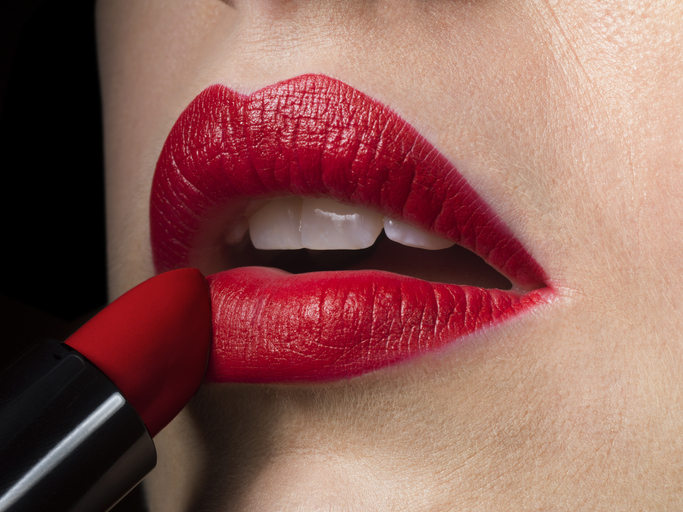
TikTokers are sharing videos about the "red lip theory", says Bustle: the idea that wearing red lippy helps women attract men's attention "and generally take over the world". According to one psychiatrist, any hue from a "light cherry tint" to a "deep blue-red" suggests "passion, power and sexual virility", sending the subconscious signal to potential partners that you're "ready to mingle". It's also good for work meetings: the shade "draws attention to your mouth", meaning people listen more carefully to what you're saying. |
The Victorians were right to cultivate the soul |
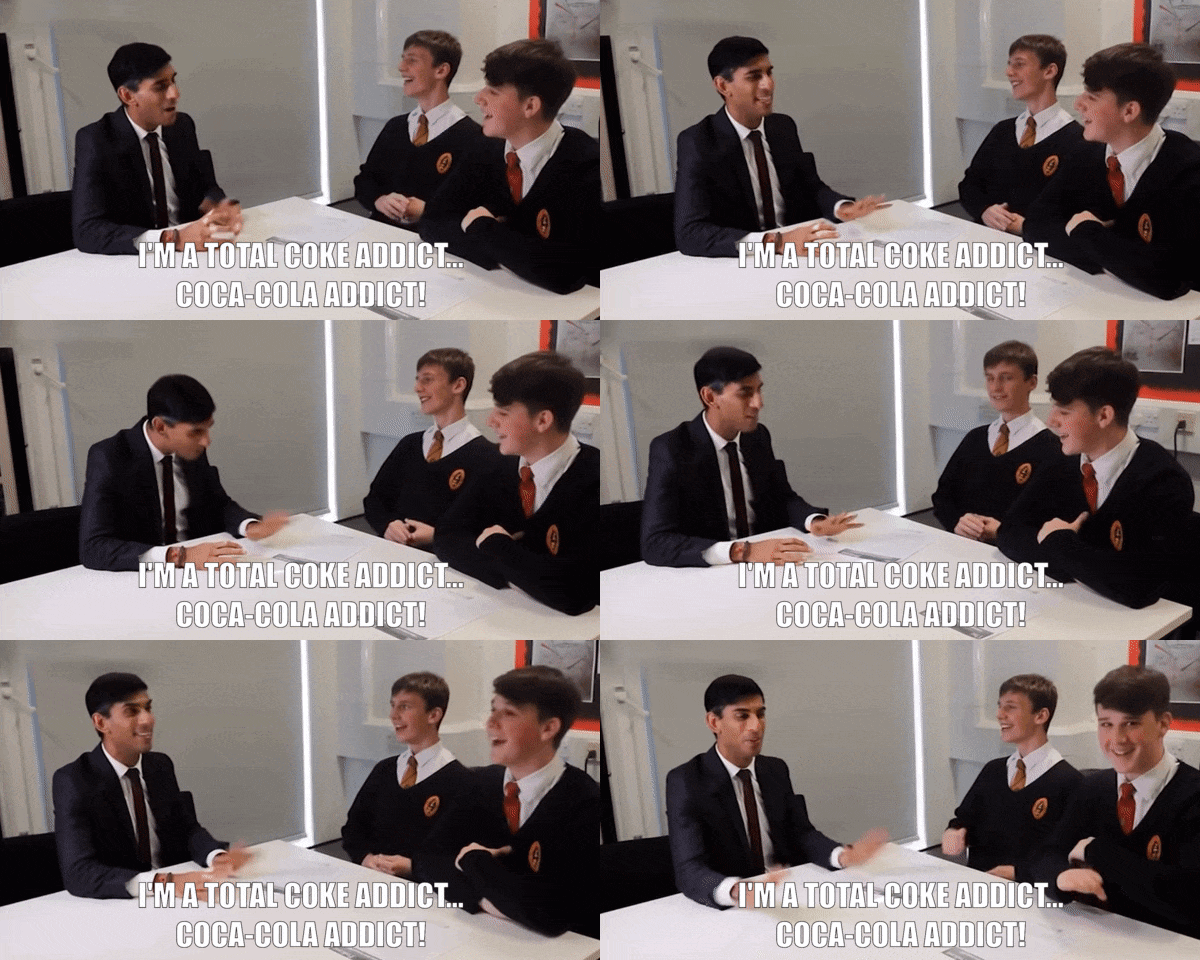
Rishi Sunak's alumni profile from Stanford Business School lists his interests as "Star Wars, sports and the history of Coca-Cola", says James Marriott in The Times, and this Christmas the PM tells us he will be watching Love Actually. Nothing wrong with any of that. But compare it to William Gladstone, that "pre-eminent Victorian", whose turbulent psychology was fed by a vast and eclectic mix of literature, ideas and poetry. He wrote books on theology and Homer. "He chopped down trees. He collected china." He spent part of his first year as chancellor studying a book about pistols called On the Application of Machining to the Manufacture of Rotating Chambered-Breech Fire Arms and their Peculiarities. "Nobody knows why." |
The important contrast is not between two men but between "two eras and two attitudes". In our age of rigorous "self-optimisation", everybody's abs must be toned in the gym and their "bowels cleansed with smoothies of exotic concoction". Any inner turbulence is to be "smoothed away" with meditation, therapy, or the "digital sedatives of Netflix and TikTok". The Victorians, by contrast, believed in the cultivation of the soul – "with poetry, with enthusiasms, with knowledge pursued for its own sake". Their aspiration to imbibe "the best that has been thought and said" has been worn away by "modern suspicions of snobbery and prejudice". But confronted with a prime minister who describes Coca-Cola as one of his cultural interests, "you may begin to wonder whether there might be something to be said for such snobbery". |
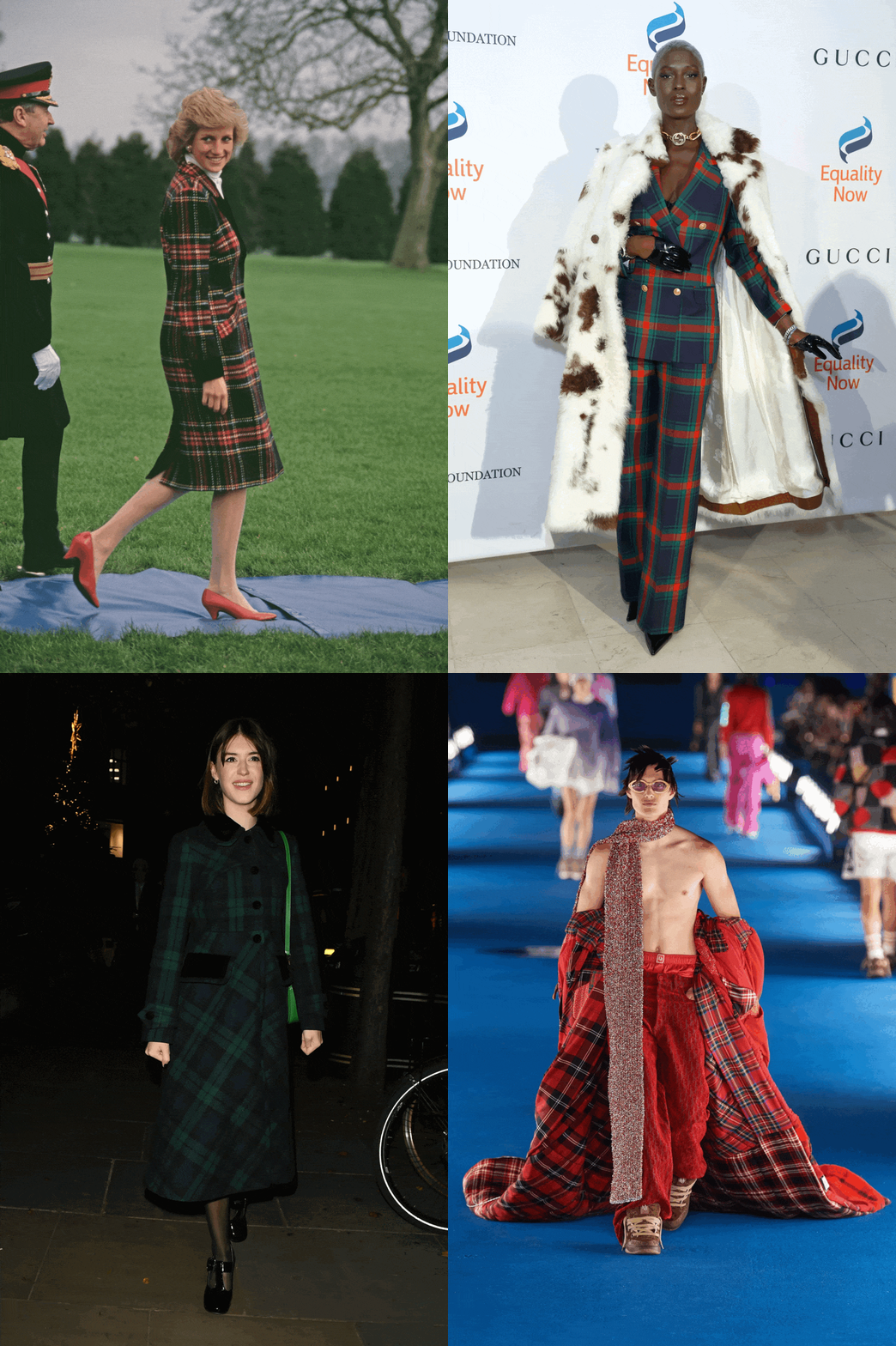
Tartan "always enjoys a merry resurgence around this time of year", says Vogue. But it's not just royals spreading good tidings with their "setts" – a traditional term for the Caledonian criss-cross. The actress Jodie Turner-Smith recently wore "deep moss-green, navy and postbox-red Gucci checks" under a white fur, while Daisy Edgar-Jones "gave off a Miracle on 34th Street vibe" in a Black Watch tartan Miu Miu coat. "The bonniest take on legacy checks?" A patchwork red cape by Dior, "worn with a bare torso save for a knitted marl scarf that wouldn't have looked totally out of place on blustery walks around Balmoral". |
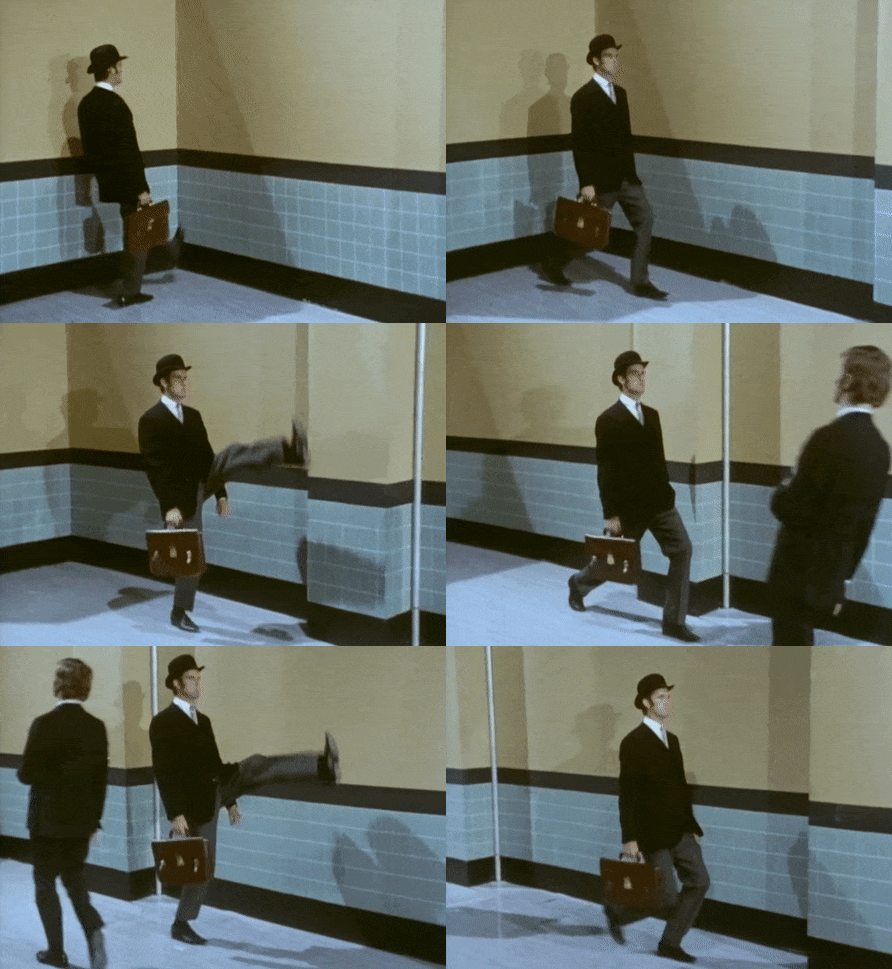
Monty Python's Ministry of Silly Walks sketch may be a satire on bureaucratic inefficiency, but it's also sound health advice. Adopting a John Cleese-style gait for just 11 minutes could burn 100 calories, according to a study in the British Medical Journal, achieving the recommended daily amount of vigorous activity and helping boost cardiovascular fitness. |
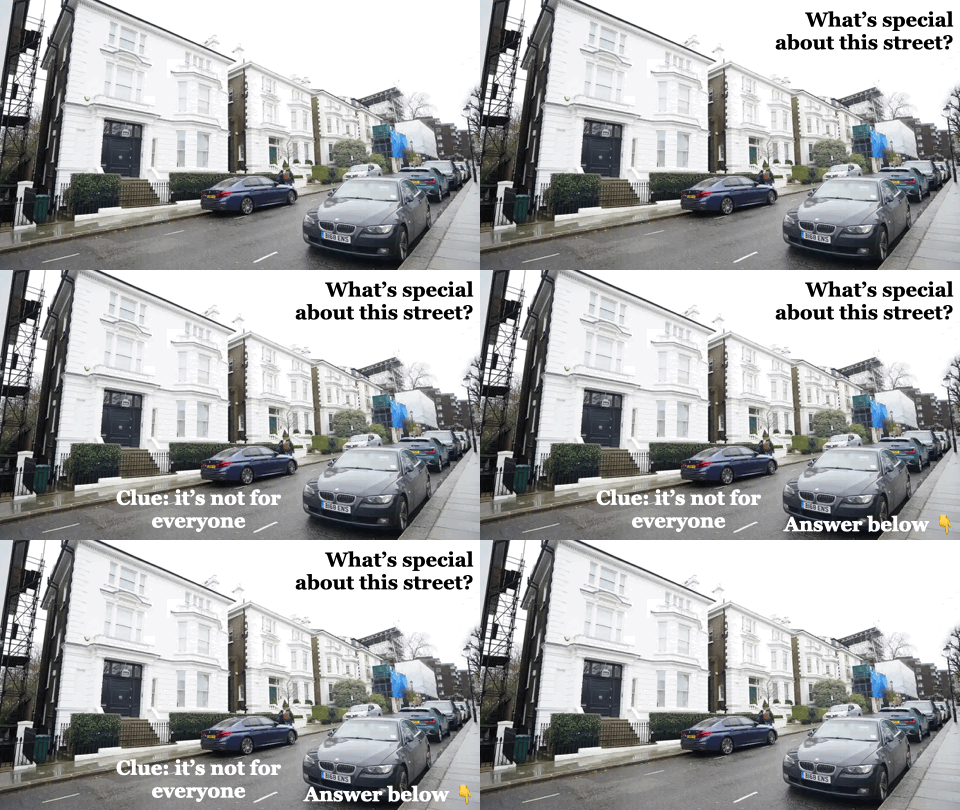
It's Kensington's Phillimore Gardens, the most expensive street in the UK, where the average house will set you back £23.8m – 83 times the national average. On mortgage lender Halifax's list of the priciest roads, the top 10 are all in west London. Just one of the top 20 is outside the capital: Titlarks Hill, a private road in Sunningdale, Berkshire, was 12th with an average price of £12.3m. |
|
|
"I like work. It fascinates me. I can sit and look at it for hours."
Jerome K Jerome |
|
|
Been forwarded this newsletter? Sign up for free to receive it every day |
|
|
https://link.newsletters.theknowledge.com/oc/60897464f90441077868de3chwepk.k5n/b1934361&list=mymail |
|
|
|






No comments:
Post a Comment