In 1961, after overhearing her parents discuss a possible Soviet nuclear test at the North Pole, eight-year-old Michelle Rochon wrote a letter asking President John F Kennedy to step in "because they will kill Santa Claus". "I share your concern about the atmospheric testing of the Soviet Union," he wrote back, "not only for Santa Claus but for people throughout the world." "However," he continued, "you must not worry about Santa Claus. I talked with him yesterday and he is fine. He will be making his rounds again this Christmas." |
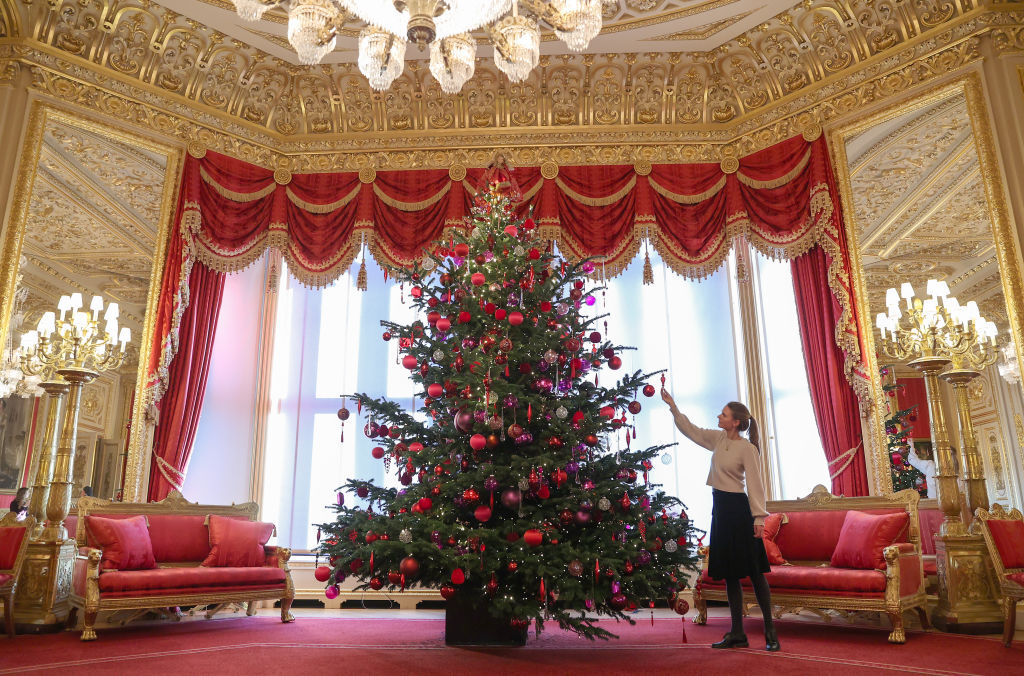
A 15-foot Christmas tree in Windsor Castle. Chris Jackson/Getty |
The medieval origins of the Christmas tree |
Evergreen conifers are "among our oldest tree species", says Rivka Galchen in The New Yorker. "Picture a serene triceratops crunching on a pine tree and you won't be too far off." Exactly when people started decorating them for Christmas isn't clear. We know that in 1419, in the German city of Freiburg, a tree was set up in a hospital and adorned with "apples, wafers, gingerbread, and tinsel". In Riga, in 1510, a group of merchants decorated a tree with thread and straw, then burned it at Lent. But the term "Christmas tree" wasn't written down until 1611, in a ban on felling trees in the Alsatian town of Turckheim. |
Not all Christians are into it. "The tradition was for centuries avoided or disdained by Catholics," with the Vatican only putting up a tree for the first time in 1982. Puritan settlers in New England "viewed the trees with suspicion"; in 1659, the government of Massachusetts Bay threatened five-shilling fines for "whosoever shall be found observing any such day as Christmas or the like". Others allowed themselves to have more fun. In 1823, the Society of Bachelors in York, Pennsylvania advertised that its tree would be "superb, superfine, superfrostical, shnockagastical, double refined, mill'twill'd made of Dog's Wool, Swingling Tow, and Posnum fur; which cannot fail to gratify taste". |
|
|
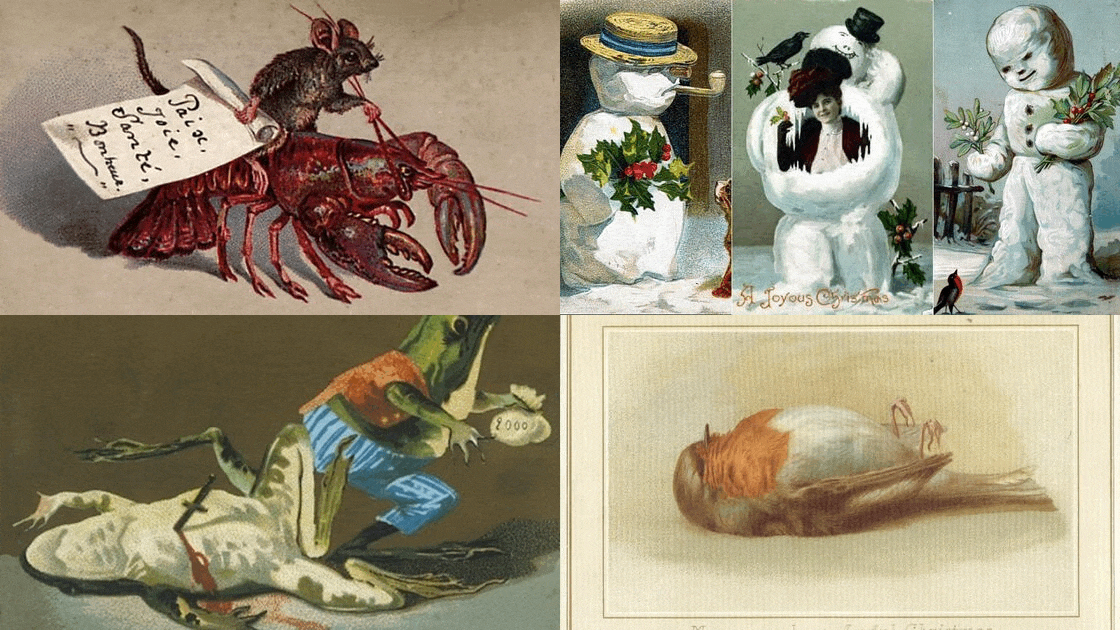
Compared to the cheery cards of today, Victorian designs were "downright creepy", says Mental Floss. Among the weirdest scenes depicted: a lobster-riding mouse, humans emerging from the stomachs of evil snowmen, and a frog making off with a moneybag after murdering his pal. Particularly popular were images of dead robins, which to 19th-century folk signalled good luck for the coming year. |
|
|
Every Christmas, the North American Aerospace Defence Command swaps monitoring the skies for missile threats for tracking Santa's present-delivering progress. More than 1,500 staff members and volunteers stand by to field phone calls from inquisitive children, with Norad's website also offering updates. The tradition began in 1955, when a child attempting to talk to Father Christmas dialled a misprinted number on a department store advert, and ended up talking to Colonel Harry Shoup, a US Air Force commander watching for Soviet air raids. Shoup played along, telling the child he was indeed Santa, and more calls soon followed. |
Whatever the "tsunami of television adverts" might suggest, says Nell Frizzell in The Guardian, affection doesn't have to be shown through expensive Christmas gifts. "There will always be things you can offer friends and relatives that don't involve shopping." Fix the worn-out things in their house; paint their ceilings; do some repairs on their bike. Suggest a house swap for your next holiday, or cook meals for their freezer. And childcare "is a gift beyond riches", especially if you can offer something overnight. None of this needs to be "twee, performative or smug" – it's simply about "showing the people you love that you have thought about them". And there are better ways to do that than buying them "a set of egg cups and a portable speaker in the shape of a butt plug". |
|
|
Share The Knowledge with friends and family before the end of the year for a chance to win a £500 John Lewis voucher. |
Each successful referral counts as one entry, so the more you make, the better your chances. Simply share via WhatsApp or email below, or click here to copy and paste your unique referral link. |
|
|
So uncool. Instagram/@thegrazinggoatw1 |
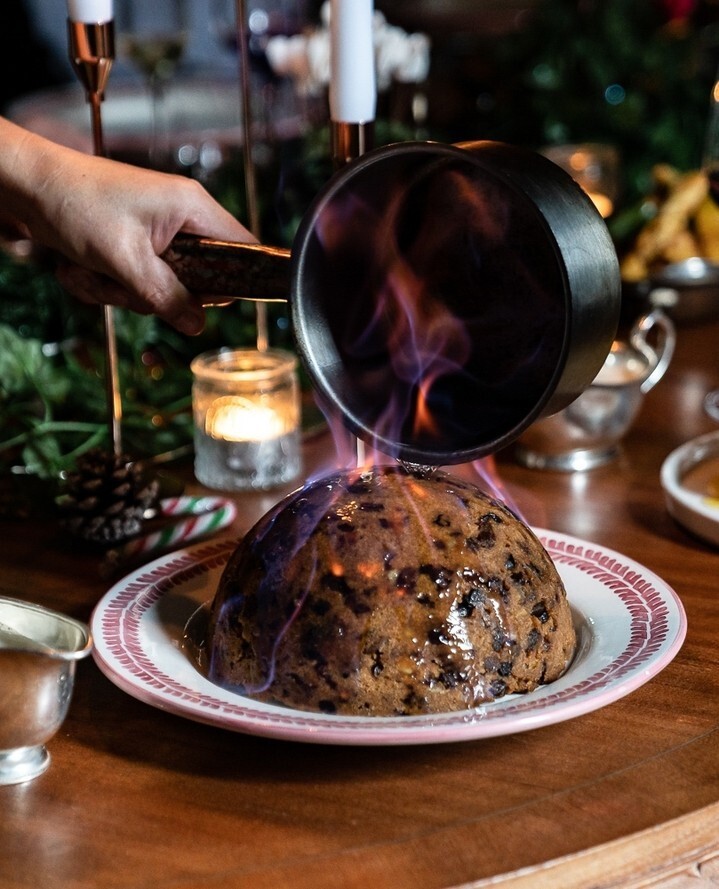
Gen Z is cancelling Christmas pudding. Almost half of under 25s say they don't like the dessert, despite more than a third having never tried it. According to researchers, it means the festive food could be extinct by 2025. I don't know what I find more alarming, says Hannah Twiggs in The Independent: that people are surprised teenagers "don't want a boiled fruit cake on Christmas Day", or that the blame for young people killing stuff off has finally passed to Gen Z. "We ageing millennials carried the torch for so long – now we're just as overlooked as Gen X and the boomers." |
|
|
"What an awful time of year this is! Just as one is feeling that if one can just hold on, it won't get any worse, then all this Christmas idiocy bursts upon one like a slavering Niagara of nonsense and completely wrecks one's entire frame. This means, in terms of my life, making a point of buying about six simple inexpensive presents when there are rather more people about than usual, and going home. No doubt in terms of yours it means seeing your house given over to hoards of mannerless middle-class brats and your good food and drink vanishing into the quacking tooth-equipped jaws of their alleged parents. Yours is the harder course, I can see. On the other hand, mine is happening to me."
Philip Larkin, in a letter to art historian Judy Egerton |
|
|
Been forwarded this newsletter? Sign up for free to receive it every day |
|
|
https://link.newsletters.theknowledge.com/oc/60897464f90441077868de3chwepr.im3/eccb7f9c&list=mymail |
|
|
|






No comments:
Post a Comment