
 28 August, 2021 Hello, All good wishes,
Jon Connell Editor-in-chief
The pandemic 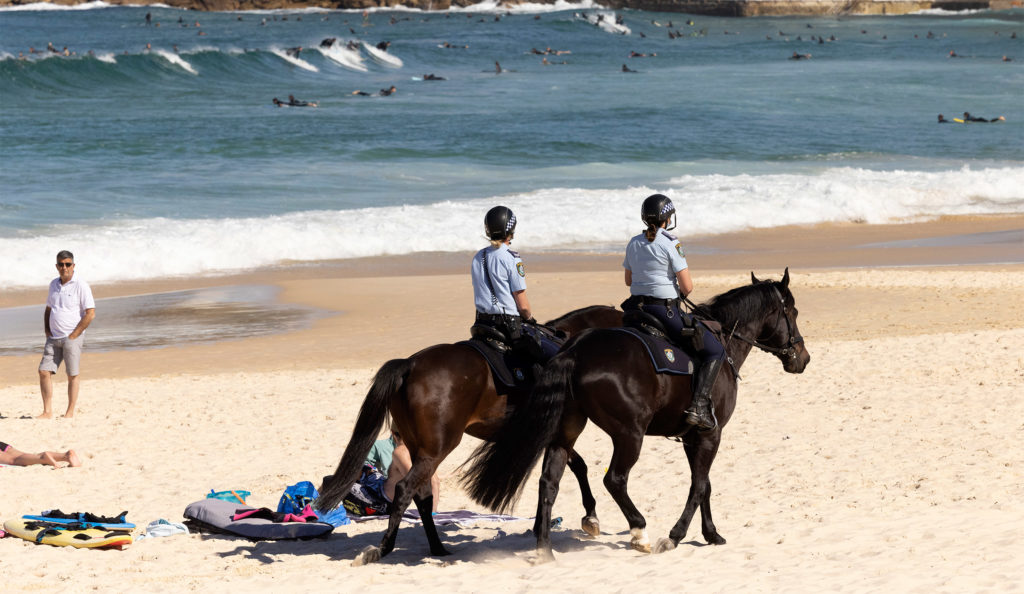 Mounted police patrol Bondi Beach. Jonathan Alpeyrie/Bloomberg/Getty Images Australia's endless lockdown "Everything you've heard about Australia and coronavirus is true," says Gideon Rozner in The Daily Telegraph. Sydney has been in full lockdown since June, triggered by a mere 82 cases. People on the streets in New South Wales have been told not to be "too friendly" to avoid transmission. A rural council dog shelter put down 15 dogs rather than routinely transfer them and risk "a potential health hazard". Our government's obsession with "zero Covid" is "destroying us". Strangely, these extraordinary restrictions remain popular, says Alexander Downer in The Spectator. As Clive James once said: "The problem with Australians is not that so many of them are descended from convicts, but that so many are descended from prison officers." True, the lockdown has saved many lives – fewer than 50 people have died with Covid this year – but the Australian budget surplus is now nearly a $1 trillion debt. We need "a way out". Australia will only reach that exit when 70%-80% of the population has been double-vaccinated, PM Scott Morrison said this week. Thanks to the "vaccine strollout", that figure currently stands at just 32%. But instead of giving us "effusive rah-rah talk" about "adjusting our mindsets", Morrison needs to level with us, says Shaun Carney in The Sydney Morning Herald. Were we to open up as the UK did in July and let the Delta variant rip, we'd have 37 daily deaths and nearly 12,000 cases. Australia must decide how many people it's willing to sacrifice to "the mortuary or the horrors of long Covid". It's just as crazy in New Zealand, says Rod Liddle in The Sunday Times. There the "pious and hugely irritating" PM, Jacinda Ardern, imposed the most severe lockdown possible when a single Covid case was found last week. She has already turned the country into a "mysterious socialist hermit kingdom" by shutting borders over the past 18 months. Yet only one in five New Zealanders has been vaccinated. When the virus does inevitably strike the islands, "it will kill". We Kiwis can be "sleepy little hobbits", says Max Rashbrooke in The Guardian. But New Zealand's per-person Covid death rate is nearly 400 times lower than the UK's, unemployment is 4% and our economy recovered more quickly than Britain's. Ardern has made mistakes – notoriously, our vaccine rollout is the slowest in the developed world. We also need an exit plan and a date to open our borders – but only once global vaccination rates "are sky-high". Because, from where we are, learning to live with the virus, Boris Johnson-style, looks rather like "learning to die with it".

Eating in Man's desire "to milk everything in existence is both awe-inspiring and dystopian", says Emily Sundberg in Grub Street. Oats, almonds, soy, coconuts – even potatoes and mushrooms. But good old cow's milk is back. As one Manhattan waitress tweeted, the "hot girls" of New York "are ditching the alternatives and are going back to basics". The alternatives are getting a bad press – almond milk is bad for the environment and oat milk is allegedly "too oily". And, faced with the dominance of alternatives in trendy cafés, ordering "real" milk has become "an act of quiet rebellion". "Both sides are wrong," says creative consultant Chris Black on Twitter. "I am post-milk. I drink coffee black and don't consume sugary cereals. I make them put water in my smoothie."
Life 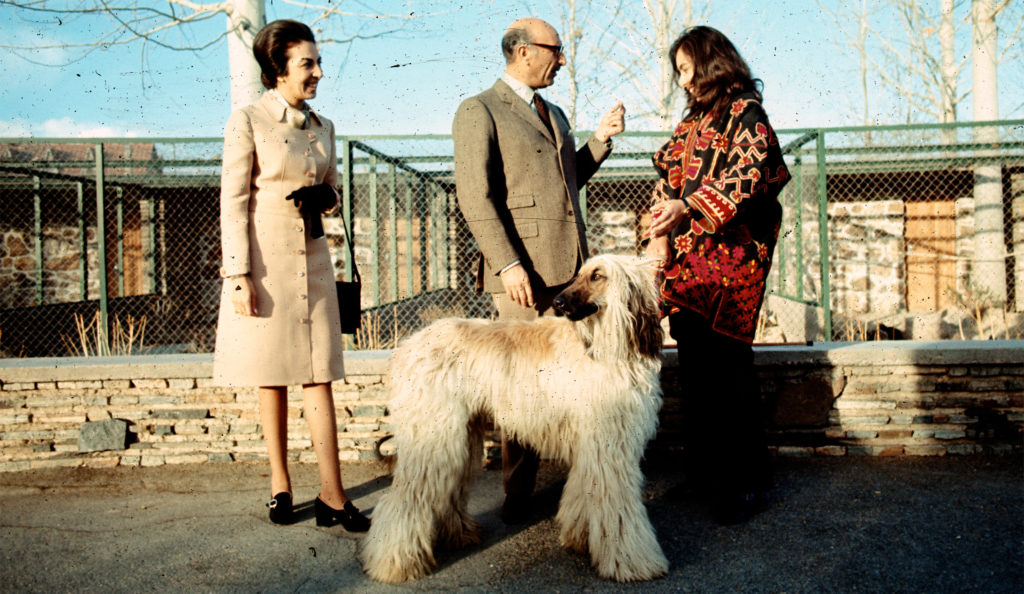 Mohammed Zahir Shah, the last king of Afghanistan, in Kabul in 1972. Anwar Hussein/Getty Images A happy childhood in 1960s Kabul Mid-1960s Kabul, where I spent my formative childhood years, was a "happy city", says Indian journalist Karan Thapar in The Spectator. "Of course, it was poor, conservative and hierarchical but people were always smiling." When my mother took me out, "shopkeepers would slip Hershey's chocolates or spearmint gum into my hands and then seal my lips with their fingers". On Pashtunistan Square was the Khyber restaurant, "famous for its beef steaks and lemon meringue pies". A Swiss hotel called Spinzar sold "delectable" pastries. On Fridays we'd drive out of the city to the summer homes of the aristocracy and royal family. (They were eventually deposed in 1973, after 47 years.) "Society, in the Victorian sense, was small but sophisticated. The upper classes spoke better French than English, but they all warmed to Indian classical music." They also adored Hindi films. Within the high-walled compounds of the rich, women swapped burkas for Chanel dresses and high-heeled shoes, and smoked American cigarettes with carefully manicured fingers. "Much of today's Kabul didn't exist." The present-day US compound was scrubland where my father taught me to drive. After my voice acquired a "twang" from the American School, my mother shipped me off to be educated in India. But I have peanut butter every day at breakfast, and I'm reminded of my old Afghan home. "Unlike Robert Graves, I cannot say 'Goodbye to all that'."
Zeitgeist The real victims of cancel culture The left thinks cancel culture is a "self-pitying myth spread by the right" that doesn't really exist, says Michael Deacon in the Telegraph. And it's true that when celebrities get cancelled, there are often no real consequences. They remain rich and famous. With an £820m fortune, JK Rowling is "too big to cancel", despite her unwoke views on gender. But the left overlooks a vital point: the victims of cancel culture are not the targets of it, "the rich, famous and powerful", but ordinary folk. When a celebrity is brutally cancelled on social media, normal people who share their views decide they'd better keep quiet. Without a fortune to fall back on, many worry about losing their jobs. We're seeing the rise of what Tom Stoppard calls "self-cancellation", as people conceal their opinions in public for fear of being cancelled.
Property 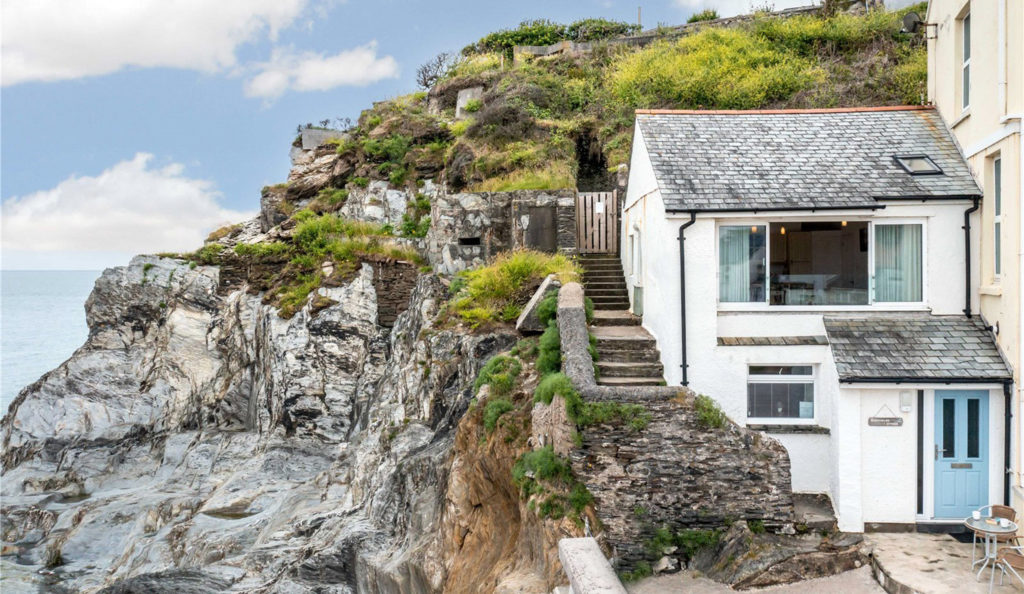 THE COTTAGE Near Slapton Sands beach, in south Devon, Boathouse Cottage has an upside-down layout to make the most of the coastal views. The main bedroom is downstairs and the open-plan kitchen and living area are on the first floor, with a second bedroom at the back. It's a 20-minute drive to Kingsbridge or Dartmouth. £500,000.
Desert Island Discs 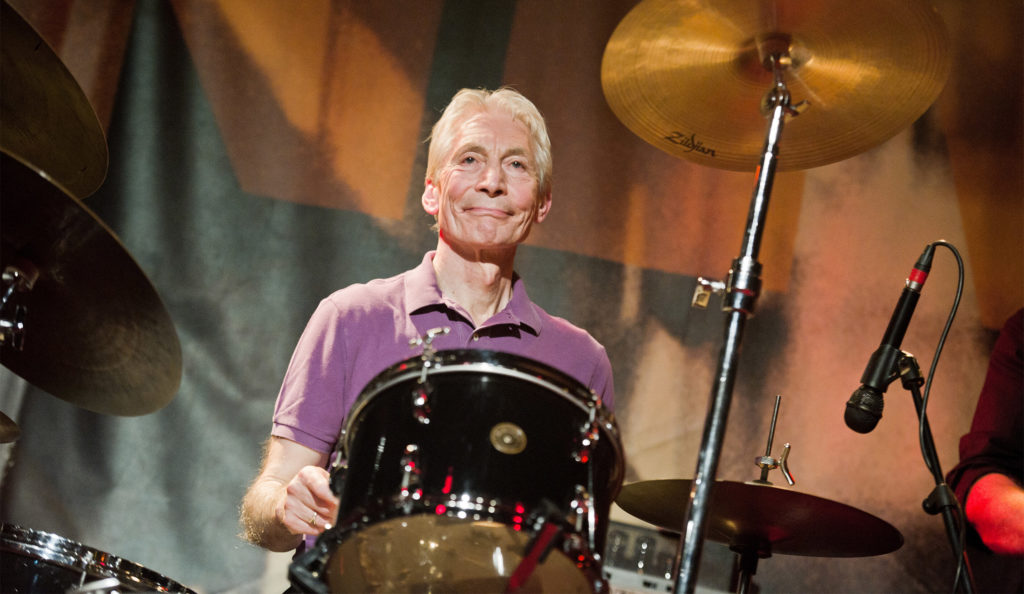 Charlie Watts on the drums in Paris, 2011. David Wolff/Patrick/Redferns Charlie Watts, who died this week at 80, wouldn't have minded if the Rolling Stones hadn't lasted. "I used to hate girls chasing us down the road," the group's drummer told Sue Lawley on Desert Island Discs in 2001. But their success enabled him to indulge in his love of tailoring: "I have this disease – I see a swatch and have to have a jacket [made]." He took a specially made travelling wardrobe on tour, "with a retinue to carry it round", and hated people touching his belongings. A "midlife crisis" led to heroin and alcohol problems in the 1980s. "I got to a point where I realised I was going to lose everything – I just stopped." Keith Richards, who never offered Watts any drugs, found him collapsed once and gave him some advice: "You should wait until you're 60 before you start… then you can do it slowly." Watts's wife, Shirley, whom he married in 1964, stuck with him. (They had one daughter, who provided their only grandchild.) While he enjoyed collecting vintage cars (he never drove them) and clothes (including suits owned by the Duke of Windsor), she looked after Arabian stallions on their north Devon stud farm, as well as their many dogs – 24 at one point. Going on the road with the Stones was like a military operation. When he got the call from Mick Jagger and Richards to announce a new tour, "it was like call-up time for the army". And though he toured the world repeatedly, the view from the back of the huge stages rarely changed: "All I ever see is Mick's bum moving." 🎵 Out of Nowhere, Charlie Parker 🎵 Night and Day, Frank Sinatra 🎵 Dance of the Coachmen and Grooms (from Petrushka), Stravinsky 🎵 Reunion Party, Tony Hancock and Sid James 🎵 Jack the Bear, Duke Ellington 🎵 The Lark Ascending, Vaughan Williams, with Nigel Kennedy 🎵 John Arlott commentating on Jim Laker's 19-wicket Ashes haul at Old Trafford, 1956 🎵 The Way You Look Tonight, Jerome Kern, sung by Fred Astaire 📕 Collected Poems 1934-52, Dylan Thomas 🎁 A pair of drumsticks Listen to the episode here.
Inside politics Britain is "notoriously obsessed with animals", says Imogen West-Knights in the I newspaper. In 2016 a petition to "Give status to Police Dogs and Horses as 'Police Officers'" amassed more than 120,500 signatures and was debated in Parliament. In the 2011 census, 16% of households listed their dogs as family members. This "terminal" fixation has reached its height with the saga of Geronimo the alpaca: Environment Secretary George Eustice and the PM's spokesman have had to wade in, while Keir Starmer's most decisive statement all year has been "soberly advocating for the swift execution of some woman's pet".
Quoted "As I grow older I'm becoming more and more like the American empire. For example, I'll walk into a room and then think 'Why did I come in here?'" Satirist Karl Sharro on Twitter That's it. You're done. Been forwarded this newsletter? Sign up to receive it every day and get free access to up to Subscribe for a free three-month trial with full access to our app and website. Download our app from the App Store or Google Play
Unsubscribe from the newsletter |

August 28, 2021
Australia’s endless lockdown


Subscribe to:
Post Comments (Atom)


No comments:
Post a Comment