
 17 July, 2021 Hello, All good wishes,
Jon Connell Editor-in-chief
Jacob Zuma 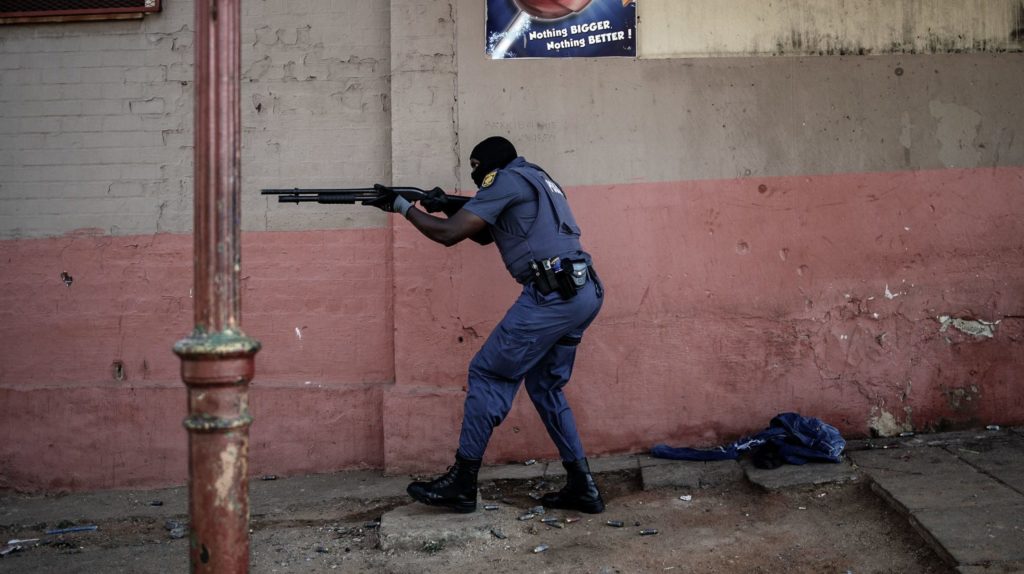 A South African Police Service officer shoots rubber bullets at protesters. Luca Sola/ AFP/Getty Images South Africa: a failed state? A week ago, I was just worried about getting my jab – "now I'm more worried about where we're getting bread from", says Paddy Harper in the Mail & Guardian (South Africa). In my hometown of Durban, in the northeast province of KwaZulu-Natal, where rioting started last week, people are being murdered, three malls have been "stripped" and the city centre has been trashed. The spark that ignited this chaos was the imprisonment last week of Jacob Zuma. The former president was put away for being in contempt of a corruption trial. He's charged with fraud, racketeering and laundering money through a £3bn arms deal, which he denies. But then the violence spread to Gauteng, around Johannesburg, and beyond: major roads have been blocked, 200 shopping malls looted and up to $1bn worth of goods stolen or destroyed. At least 117 people have died and more than 3,000 arrested. Vigilante groups are patrolling neighbourhoods. President Cyril Ramaphosa has warned of food, fuel and medicine shortages and has called for 25,000 troops to support the overwhelmed police. Don't mistake this "as a sign of massive political support" for the former president, says Eusebius McKaiser in The Washington Post. This is about "the moral decline, and technocratic failure, of the African National Congress-run state" over the past quarter of a century. Far from being "'Free Zuma' goons", many of the rioters are among the 74% of under-25s in the country without a job. Nelson Mandela's old slogan "A better life for all" may still sound good, but millions have been left behind. They have "no reason to be excited about waking up tomorrow" – so what have they to lose by rioting? Actually, many of the looters will have family members employed in those shattered businesses – and they will now be out of a job, says Omry Makgoale in the Daily Maverick (South Africa). "Cutting off your nose to spite your face, as they say." Some are saying the country is a "failed state" – look at Zuma's son Duduzane, asking rioters to loot "responsibly". But why did the local authorities take so long to respond? Were the police in cahoots with Zuma's cronies? This looks more like "an attempted coup d'état" by supporters of the former president. That's unlikely, says Moeletsi Mbeki on the BBC's Today programme. A jet flight across South Africa takes two hours, "so there is no way anyone can instigate violence on that scale". Blame Ramaphosa instead. The ANC has "lost the popular edge" over the decades and chosen to ditch the poor to focus on the black middle class – which Ramaphosa epitomises. The current president is a decent man, but is "a master at dancing on eggshells", says Brian Pottinger in UnHerd. Since he became president in 2018, the 68-year-old has shown a "surreal aloofness" in dodging all the tough questions on law, order, land redistribution and ANC in-fighting. This insurrection will be suppressed, but then what – yet another compromise? Or what needs to be done: a bold programme of renewal, splitting the ANC and dumping decades of failed policies. "It is not looking hopeful." Listen here to Moeletsi Mbeki on the Today programme, from 2h 50m.
Quirk of history The winners of the 1966 World Cup earned about £80 a week and received a mere £1,000 bonus after their victory. When their football careers ended, they all had to get ordinary jobs. Sir Geoff Hurst retrained as an insurance salesman after a brief spell on the dole, says The Telegraph. He recalls: "My wife would pretend to be a potential client and I would practise my door-to-door sales technique, trying to sell her life insurance." Bobby Moore was given the position of sports editor of the Sunday Sport, Ray Wilson became an undertaker, and for a short time, Gordon Banks found himself selling raffle tickets outside a local supermarket.
Long read shortened 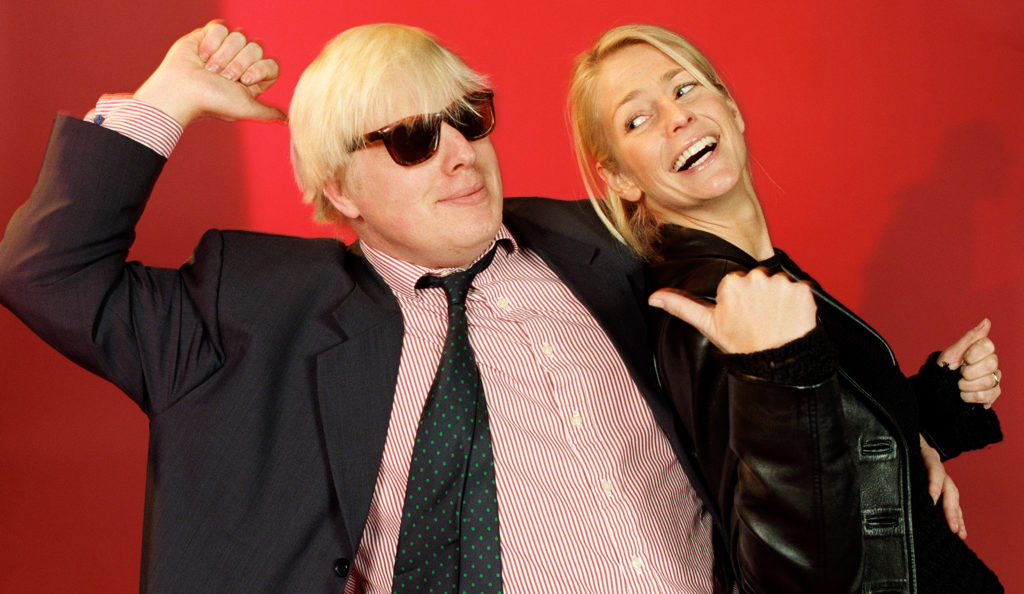 Boris Johnson and Ulrika Jonsson. Eleanor Bentall/Corbis via Getty Images How the PM made himself part of history Our prime minister "plays to the rootedness of Middle England", says Tom McTague in The Atlantic. Yet Boris was named after a Russian his parents met in Mexico, who bought them plane tickets so Johnson's heavily pregnant mother wouldn't have to take the bus back to America. Johnson was a "quiet, introspective boy", partially deaf until he was eight or nine due to having glue ear. At Eton, "he transformed himself into the confident, insouciant extrovert we see today". Eric Anderson, who was housemaster to both Johnson and Tony Blair while they were at the school, says that Johnson was "without a doubt" his most interesting pupil. A friend of the PM says Johnson subscribes to a pre-Christian morality with "no clear set of rules". Johnson describes himself as a "very bad Christian". "Johnsonism" is driven by John Bew, a historian and the PM's foreign policy adviser. In his book Realpolitik: A History, Bew argues "politics is the law of the strong", that "states are strong when they are domestically harmonious", that "ideas matter because people believe them, not because they are true", and that "the zeitgeist" is the most important thing in politics. Johnson places a similar trust in political rough and tumble and in big narratives. He has also twigged that voters won't accept "a laissez-faire attitude towards free trade" or the rise of China any longer. But his famous optimism has limits. "All romantics need the mortar of cynicism to hold themselves up," he told McTague during the several months he spent shadowing him. It was the only serious point he made. But when I brought up the remark later, Johnson dismissed it: "Did I say that? How pompous of me." Read the full article here. A version of this piece ran in last week's Times Magazine.
Property 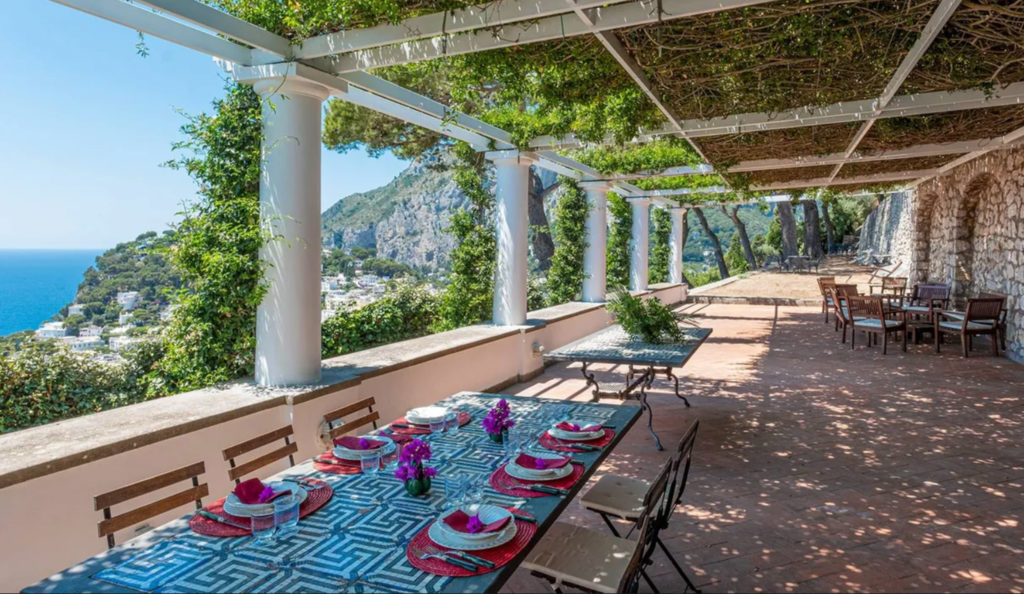 THE HIDEAWAY This two-storey, five-bedroom villa in Capri has vaulted ceilings, handmade terracotta floors, arched doorways and an ancient fireplace. Outside there's a large garden with a pool and several terraces and balconies with views over the Bay of Naples. Although Capri is a popular tourist spot, this villa is relatively secluded. €4m.
Inside politics An uneasy truce between right and left "America has arrived at a strange kind of equilibrium," says Janan Ganesh in the Financial Times. The left "enjoys an entrenched supremacy in culture", from universities, publishing and Hollywood to corporate PR. But the right has its own "exorbitant privilege" in politics. Less-populated Republican states have the same number of representatives in the Senate as the bigger Democrat ones. The electoral college, which elects presidents, has a similar bias. This, in turn, has led to a Republican judiciary: three of the nine Supreme Court justices were put forward by Donald Trump, who lost the popular vote, and confirmed by a Senate "in which Wyoming's 600,000 souls weigh as much as California's 40 million". Not bad consolation for a lack of right-wing professors. Each side is now pushing into the other's territory. Democrats are calling for electoral reform and even an expansion of the Supreme Court to pack in more liberal justices. The right is setting up its own (social) media channels and challenging the dominance of critical race theory in education and public life. But it might be that the current "workable stalemate" is the very thing holding America together.
Tomorrow's world Is doomsday nearer than we think? In 1972, the Massachusetts Institute of Technology's Jerry Foster famously went on American television to declare that by "around 2040 to 2050, civilised life as we know it on this planet will cease to exist". His team had used early computer modelling, based on data including population growth, industrial output and pollution, to predict that society would collapse by the middle of the 21st century. The study was "widely derided at the time", says Nafeez Ahmed at Vice. But a senior director at accountants KPMG has rerun the numbers and found that we're right on track. Using an updated version of the simulation, named World3, Gaya Herrington predicts economic growth halting in a decade and society starting to fall apart a decade after that. Technological progress and investment in public services could avert it, "but we really have only the next decade to change course".
Quoted "My earnest advice to my children is never take out a pension. It is all fees and blather; far better to invest in brown furniture." Nicholas Coleridge, in The Spectator That's it. You're done. Been forwarded this newsletter? Sign up here to receive it every day Click here to register for full access to our app and website Download our app in the App Store Follow us on Instagram
Unsubscribe from the newsletter |

July 17, 2021
Is doomsday nearer than we think? 💀


Subscribe to:
Post Comments (Atom)


No comments:
Post a Comment