SPRING SALE! Only 25¢Step into the new season with digital access to essential news. Act Now Sale Ends April 12 |
Opening weekend at Daikin Park was a roller coaster. Lifeless for two days, the Houston Astros' offense awoke for 20 runs over its final 12 innings, taking advantage of miscues by the Los Angeles Angels and propping up its own shaky pitching.
The Astros extracted a 7.64 ERA from four starters and burned through 18 ⅓ innings by their bullpen but salvaged a split of their opening series. The Red Sox arrive next for a three-game set. First, here are three takeaways from an eventful four games against the Angels:
Take a walk
Angels hitters were only too happy to do this. And for four games, Astros pitchers were ready to oblige.
The Astros issued a whopping 28 walks in their opening series, setting a franchise record for most walks allowed in the first four games of a season. The previous record was 26 walks, established by the 1976 Astros. No other team in franchise history has walked more than 21 batters in its first four games.
The wildness is uncharacteristic and, needless to say, unwanted. Last season, the Astros' pitching staff posted the 16th-highest walk rate in the majors. It owned the fourth-highest rate in 2024 but the 14th-highest out of 30 teams from the 2021-23 seasons.
"This is a good staff," manager Joe Espada said after Sunday's finale. "We are known for putting zeroes up on the board on the pitching side. We've got some guys who are starting to get settled in new roles and we'll get it going.
"But the Angels, they were tough. They put some really good at-bats, they were patient, they made us work hard for all 27 outs."
That was the frustrating side for Houston. The encouraging part: Its lineup took its share of walks, too.
Astros hitters walked 23 times in the four-game series. Only the Angels had more walks through Sunday. Last season, just three teams had a lower walk rate than Houston. More discipline at the plate has been a priority all winter, making the opening series a potentially positive step.
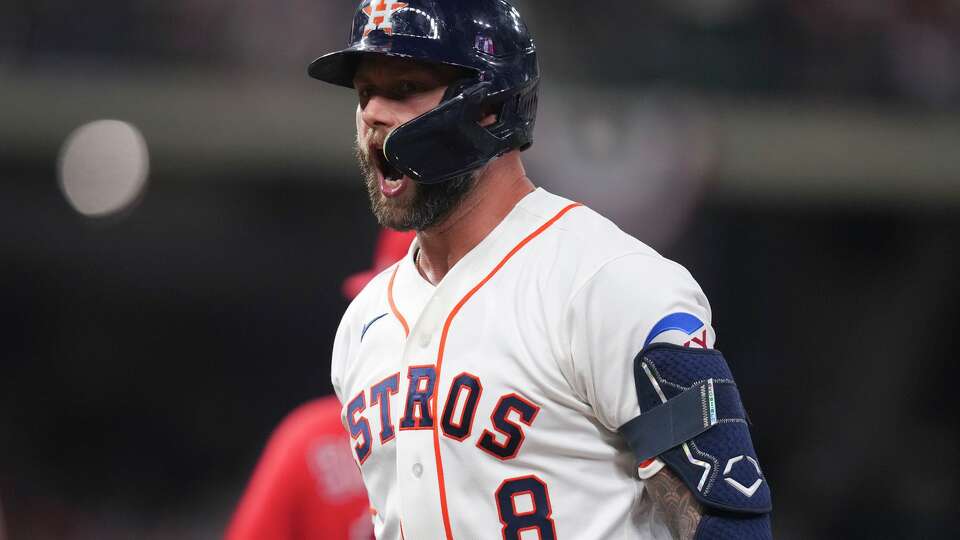
An oft-cited flaw last year was hitters' propensity to "try to do too much" with men in scoring position. Just two teams drew fewer walks in such situations in 2025. Twelve of the 23 walks the Astros drew in this series were with runners in scoring position, a trend Christian Walker noted after Saturday's comeback.
"I think what stands out to me is the guys knowing when to let the pitcher get himself into trouble, feel the trend of maybe a guy losing the strike zone, and then on the other side of that knowing when to get on a first-pitch fastball," Walker said. "Sometimes it's not a vocal plan, it's more just feeling the moment."
What's up with Bryan Abreu?
With Josh Hader sidelined, Bryan Abreu began the season as Houston's fill-in closer. His two outings against the Angels held enough to prompt questions, if not concern.
The Astros brought in Abreu with a five-run lead in the ninth inning Saturday. Abreu had not pitched in four days, and Houston was seeking its first win. Abreu finished it, but he walked two batters, gave up a home run to Nolan Schanuel and threw 12 of 26 pitches for strikes.
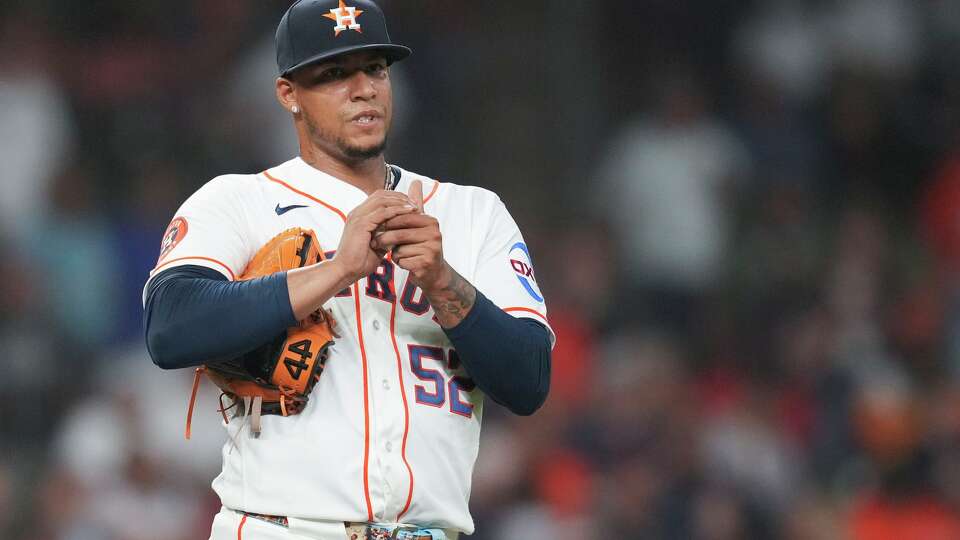
Sunday, the Astros used Abreu again, this time in a save situation with a three-run lead in the ninth. He faced three hitters, walking two and retiring one, before Espada brought in Bryan King to face Schanuel as the potential tying run.
Abreu's command appeared off. But in Sunday's outing, his velocity was also notably down. His fastball averaged 93.2 mph, compared to a 97.3 mph average last season. Espada declined to attribute that to Abreu pitching on back-to-back days early in the season.
"We did notice that, and I'm going to talk to him a little bit just to make sure that all is there," Espada said after Sunday's game.
"But just more want to see the conviction behind his pitches. I want to see him attack. You're one of the best relievers in the game. Those guys on the other side, they don't want to see you on the mound. I want to see that bulldog mentality. And it's in there. … We'll turn the page and we'll get him going, we'll get Abreu rolling."
Doing so seems vital for a shorthanded bullpen. Hader's return is not imminent, as the Astros hope he can resume facing hitters in mid-April in his buildup from biceps tendinitis. Left-hander Bennett Sousa, who saved four games in 2025, has yet to resume throwing from a mound since straining his oblique.
King authored a clutch outing Sunday, striking out Jorge Soler and Yoán Moncada with the possible tying run on base to secure Houston's win. Abreu has been one of the most dominant relievers in baseball for the past three seasons, however, and the Astros as constructed need that version of him.
Isaac Paredes is playing every day — so far
The main question with Houston's infield surplus is where Isaac Paredes will play. That shortstop Jeremy Peña started just two games against the Angels, while ramping back up from his fractured fingertip, lent some leeway. But Paredes still shuttled between several positions during the series.
Paredes made two starts at third base — with Carlos Correa shifting to shortstop in place of Peña — along with one start each at second base and DH. The Astros' stated plan has been to move Paredes around to keep his bat in the lineup.
"At first, it's difficult," Paredes said through an interpreter Sunday. "It's the beginning of the season and I've already played three positions … But it's something I'm going to get used to and be comfortable."
Paredes said Espada has been telling him a day before where he will start each game, which allows him to at least focus his pregame defensive work at that position.
One constant so far: Paredes started all four games against the Angels batting behind Yordan Alvarez in the lineup.
The responsibility is evident given opponents' propensity to be cautious with Alvarez. The Angels walked Alvarez intentionally three times in the series. Twice, Paredes followed with a walk to load the bases. And on Sunday, after Alvarez was walked in a tied game in the eighth inning with a runner on third base, Paredes delivered a two-run double that stood as the decisive hit in Houston's win.
"They can keep on walking him," Paredes said. "I'm going to try my best to get prepared to be ready for that situation and give the best at-bats that I can give."
This series underscored the importance of the Astros finding ways to play Paredes regularly even with an infield logjam. That could become trickier once Peña resumes playing every day — especially if first baseman Christian Walker continues to produce hard contact like he did against the Angels.
Still, as Espada said of Paredes after Sunday's win: "Theres a reason why he's hitting behind (Alvarez)."