|  | Khamenei at Tehran's international book fair in 2000. Hossein Fatemi/Middle East Images/AFP/Getty |
| Art did nothing to civilise the Ayatollah | Reading the obituaries of Ayatollah Ali Khamenei, says Sam Leith in The Spectator, I confess I was surprised. They described not just a "viciously power-hungry religious monomaniac", but someone who, at least in his younger years, was "disciplined, modest, intellectually curious and artistically inclined". He loved gardening and Persian poetry, played a traditional stringed instrument called a tar, and read Western authors like Tolstoy, Steinbeck and Victor Hugo. Yet in spite of his cultured hinterland, he presided over "as foul a theocracy as is to be found anywhere". | Liberal humanists like me hew to George Eliot's line that "if art does not enlarge men's sympathies, it does nothing morally". We think reading Steinbeck and Hugo, with their "sympathy for the downtrodden", cultivates empathy, and that "deep learning and good taste" mitigates against being the sort of malignant narcissist who massacres his own people "without a flicker of conscience". But many despots lead "cultural and aesthetic" lives. Some senior Nazis had a canny eye for what art to steal and an "enthusiasm for Wagner" that took in the music as much as the mythos. The Borgias were a nasty bunch but they certainly can't be accused of lacking culture. Equally, we assume that the "moral grotesquerie" of leaders like Donald Trump are exactly what to expect of people who worship power and money and show no signs of having read a book. But perhaps Trump would be like that even if he were a devotee of WH Auden's poetry or Proust's prose. Compare him with the late Ayatollah, and it was the cultured one who became the nastier piece of work. Eliot, it seems, was right in a way she didn't mean to be: "perhaps art really does do nothing morally". |
|
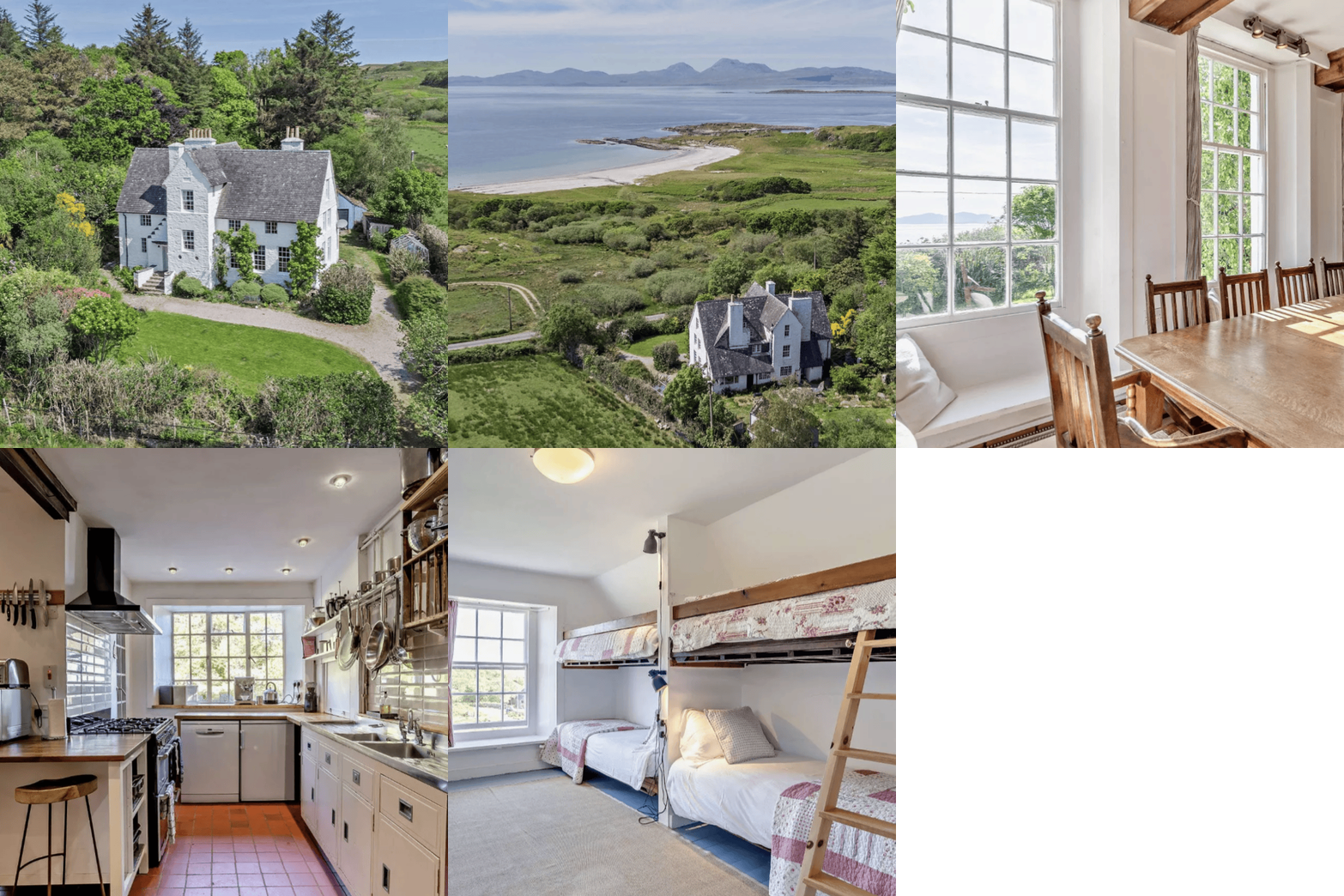
| | | | | | THE COUNTRY HOUSE This seven-bedroom Arts and Crafts house near Lochgilphead, Argyll and Bute, has been in the same family since it was built in 1929, says The Guardian. On the ground floor is a large sitting and dining room with tall sash windows, timber beams and a fireplace, along with an open-plan kitchen. Four bedrooms, including two dual-aspect principals, are on the first floor, with three further doubles on the second, two fitted with original built-in bunks. The property comes with two acres of land, and a path down to the beach, which has sweeping views to the islands of Jura and Islay. Oban is an hour and a half in the car. £875,000. Click on the image to see the listing. |
| | |
| | | | | | Don't fear the AI apocalypse |  | Don't worry, it'll all be fine (as imagined by ChatGPT) |
| There's been plenty of AI doomsterism in recent weeks – some of which we've featured in The Knowledge – predicting that AI is so good it will take all our jobs and crash the economy. But there is, of course, another argument: that AI, like all big technological developments before it, will cause disruption but not destruction; that workplaces and economies will adapt rather than collapse. | In the rest of today's newsletter we have a very persuasive piece from The Wall Street Journal on this very topic. If you've been worrying about AI, and what future the technology will leave for your children or grandchildren, you won't want to miss it. | To read the piece, and go back to receiving The Knowledge in full every day, please take out a paid subscription. It's just £4 a month or £40 for the first year. | |
| | |
| | Let us know what you thought of today's issue by replying to this email
To find out about advertising and partnerships, click here
Been forwarded this newsletter? Try it for free
Enjoying The Knowledge? Click to share |
|
|
|




No comments:
Post a Comment